




Danger to dogs
Pine processionary moth
Croatian: Borov prelac
The caterpillars of the pine processionary moth are particularly active in late winter and spring. Due to their mass reproduction, there is now a year-round risk of allergic reactions. On the island of Krk they are very active between February and May.
Danger from stinging hairs:
The caterpillars carry stinging hairs that contain a toxin called thaumetopoein. In humans these can cause so-called caterpillar dermatitis or erucism (an inflammation of the skin). The fine hairs break off easily and can be carried long distances by the wind. The proportion of stinging hairs is immense, especially in the caterpillar nests where the animals moult. These resistant hairs remain in the environment for years.
From the third moult onwards, the stinging hairs contain the dangerous toxin. Thanks to their barbs, the hairs get caught in clothing, penetrate the skin and can get stuck there. This can lead to wheals and skin irritation. Inhaling the hairs can cause bronchitis, coughing and even asthma. Children are particularly at risk.
And what about dogs?
Although dogs are protected from skin reactions by their thick coat, they can still suffer serious injuries. Curious sniffing and licking lead to severe mucous membrane injuries, swelling of the nose and mouth and, at an advanced stage, even chemical burns. Inhaling the fine stinging hairs can lead to bronchitis or asthma. Swallowed caterpillars can cause inflammation of the stomach lining.
Symptoms caused by processionary caterpillars:
- Itching
- Swelling and wheals
- Skin nodules
- Eye irritation with swollen conjunctiva
- Skin irritation between the toes
- Swelling of the mouth and nasal mucous membranes
- Inflammation of the nasal mucosa with frequent sneezing
- Throat inflammation with difficulty swallowing
- Coughing and breathing difficulties
- in case of allergic shock: lethargy, fever, heavy panting
- if the caterpillar is swallowed: severe, repeated vomiting (often bloody), usually over many days
Where is the danger?
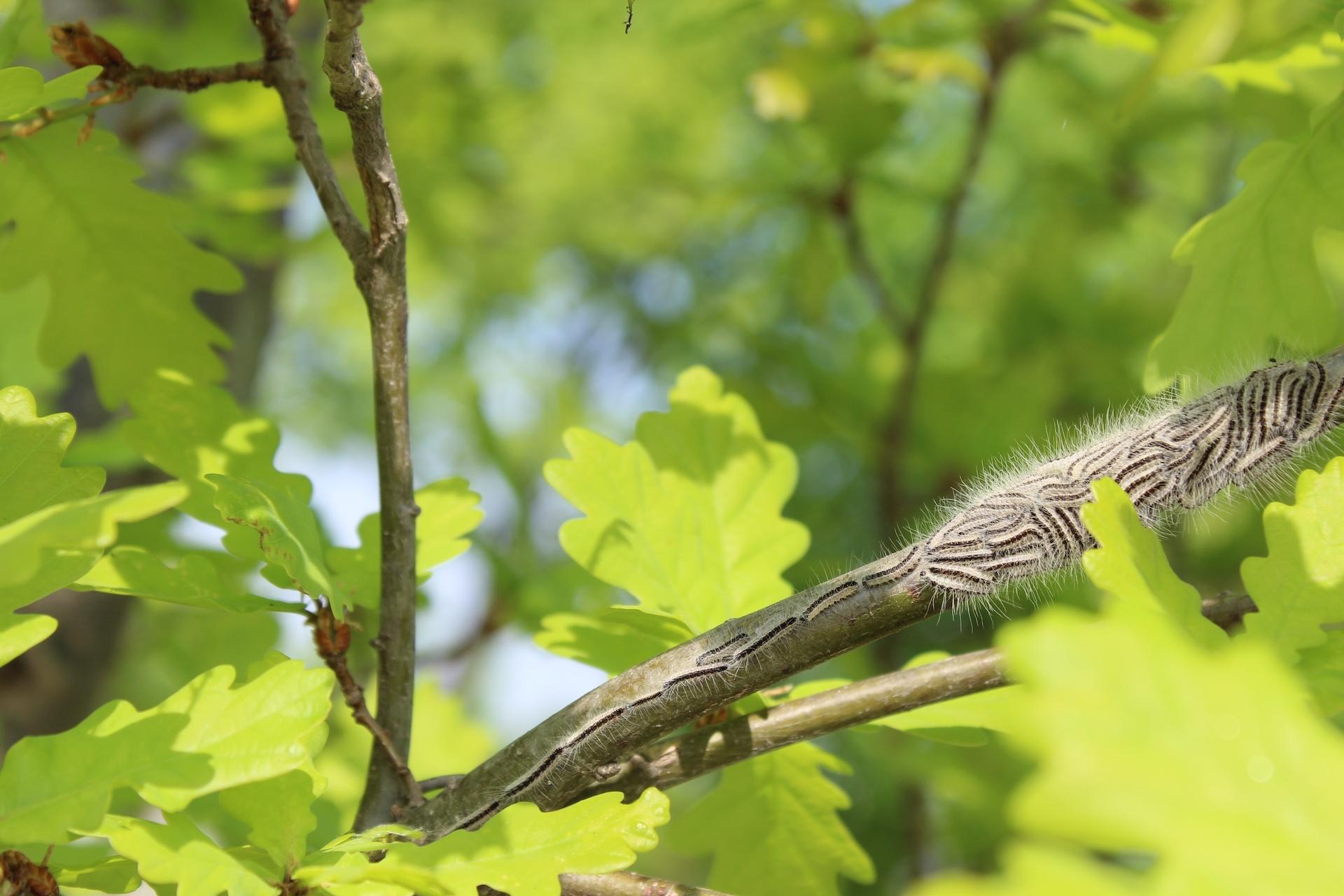
The pine processionary moth lives in pine forests, especially in dry and sunny places. Individual pines in gardens, parks and on beaches can also be infested. The caterpillars hatch in late summer and spend the winter in conspicuous white silk nests in the treetops. From around February they move in processions of 20–30 animals, one behind the other, across the ground to bury themselves and pupate. The caterpillars are dark and very hairy.
When are processionary caterpillars a danger?
The most dangerous period is February to May, when the caterpillars move across the ground in processions. However, injuries are now possible all year round: even in winter, old webs can fall from trees and tempt dogs to sniff or pick them up.
Protecting yourself properly:
- Avoid areas with processionary caterpillars.
- Watch what’s lying on the ground in such areas.
- Avoid caterpillar nests on trees.
- Avoid direct contact with hairy caterpillars.
First aid for your dog:
- Clean contact areas with plenty of water (wear gloves).
- If there are allergic symptoms, take your dog to the vet immediately.
- Decongestant medication (cortisone), antihistamines and anti-inflammatory ointments can provide relief.
“I’ve seen part of a dog’s tongue die off because of processionary caterpillars. How does that happen?”
Depending on the amount of stinging hairs ingested and individual disposition, oedema and reduced blood flow to the tissue can occur. Immediate veterinary help minimises the risk of permanent damage.
We recommend seeing a vet immediately if you suspect your animal has had contact with processionary caterpillars. Immediate help saves your dog unnecessary pain!

back to…